Featured Photo: Morning Reflections

Featured Photo: Morning Reflections

Sunday, June 02, 2024

Cicada Carp Fishing

Why Fly Fish for Carp

Carp are not the first thing that most fly anglers think of when planning a fishing trip. For the few dedicated carp out anglers out there, that is just fine. Carp are a mostly untapped fishery that provides a ton of sight fishing fun with little pressure overall, except during periodic cicada hatches that is. 

While I have begun offering a few guided fly fishing carp trips here and there each summer, it hasn't been something I've pushed hard. Carp fishing generally requires both precise presentations along with nerves of steel. Once a fish is hooked, you then also have to ace the test that comes with the fight. Carp are big, strong, and smart, and will try every possible method to break you off. 

Fly Fishing the Periodic Cicada Hatch for Carp

The periodic cicada hatch offers an opportunity for everyone to get in on the fun, however. The volume of big fish up feeding on naturals on the surface is mind blowing. Anglers of all skill levels will get enough shots at fish to eventually make some count. While this may sound crazy to most people, carp fishing with a fly rod is the thing I look forward to the most with these periodic cicada hatches. Don't get me wrong. Catching big trout on dry flies is a blast and something I'll do as much as possible as well, but carp provide a whole different challenge and set of problems for the fly angler to overcome.

Tips and Tricks for Catching Carp During the Cicada Hatch

Throughout this current brood XIX cicada hatch, I have been noticing a few little details here and there that make landing these fish a lot easier. Some of these tips will apply to your trout fishing as well and more broadly, to sight fishing in general. While there are very few absolutes in fly fishing, most of these are good general guidelines to help you find more success chasing carp on dry flies or any fish you are sight fishing for. 

  1. Use heavy enough tippet - This one may seem obvious, but even on 1X I am often outgunned. My philosophy of tippet (feel free to ask me about that sometime if you don't already know) keeps me from going much heavier than 1X, maybe occasionally down to 0X, but 1X is where I usually land for most "big" fish applications. During my first experience with brood XIX 13 years ago, I found myself using 4X on the Caney Fork. It worked fine on the trout, but for the carp, it was a little more dicey. Now, I have learned a lot and fish much heavier tippet anytime I can get away with it. 
  2. It is always better to miss short - This one isn't quite as obvious, but with carp in particular it is important to not cast too far. Carp have a weird tendency to find the end of your fly line and follow it back to the boat. If you overshoot that cast, they'll immediately quite looking for bugs and come looking for the boat. It is better to be a little short than a little long. If you miss short, you can simply recast and try again. If you are little long, you've likely blown your shot. This applies to most sight fishing situations I'll add.
  3. Lead the fish by a couple of feet - Carp move very erratically while looking for cicadas. It is best to get fairly close with your cast unless you are in very clear water. In that case, you might want to lead them by 5-6 feet. In moving water, you have the added problem of drag if you lead a fish too far. By the time the fly gets to the fish, drag has started to act and the fish won't eat. 
  4. It is best to have carp eat coming towards the boat or at right angles to the boat - This one makes sense once I explain myself. Carp have very sensitive lips. If they feel the tippet before eating the bug, they'll freak out. When they are going away from you, their lips will bump the tippet as they rise before eating the fly. If they eat while moving at right angles to the boat or coming straight at the boat, this problem is generally eliminated.
  5. Wait for the hook set - This is obvious once you've missed a fish or two, but trout anglers will generally set way too early on carp. They will be very deliberate when eating your dry fly. Wait until the mouth closes and the fish turns definitively down in the water column before setting the hook. Then, when you do set, really set the hook. No soft trout sets. Give it the ol' bass hook set. 
  6. Low side pressure is your friend - During the fight, carp will generally try to run for structure. They are very good at finding all the obstacles and sawing your tippet off on logs or other structure. At some point, you'll probably have to turn that big fish. Do so using low side pressure, the lower the better. This is good general advice for fighting trout as well. Low side pressure will generally get fish landed MUCH faster than pulling up. Up freaks them out and makes them fight harder and longer while low side pressure can get them whipped quickly. This has the added bonus of keeping fish healthy instead of playing them to exhaustion. 
  7. BONUS TIP: Don't be afraid to twitch your fly but don't overdo it - This one is particularly tricky. I mostly rely on a dead drift only. Carp often refuse naturals on the water because they are fluttering. The time to twitch a fly is when a fish is in the vicinity but seems to be passing by without seeing your offering. Give it a little twitch to help the fish find it, then stop and let it sit still again. Trout are more likely to like some twitching, but carp mostly don't. However, if fish start refusing your dead drifted flies, try adding a twitch. I had a day last week guiding on the lake where the fish quit eating dead drifted flies around 3 pm. We started twitching and immediately were back catching fish. This was the exception rather than the rule in my experience, however. 


David Knapp with a carp caught on a periodic cicada
David Knapp with a nice carp. Photo courtesy Trout Zone Anglers guide Elam Kuhn ©2024


Saturday, May 04, 2024

Eclipse and Fly Fishing the White River for #BigBrownTrout

Some trips are spontaneous, but most are the result of plenty of planning. After the last solar eclipse I experienced all the way back in 2017, I knew that any and all solar eclipses in the future would require my best effort to see them. In 2017, I had the luxury of having the path of totality crossing my home county. We enjoyed the show without much effort, but the awe inducing experience convinced me that it was worth almost any amount of effort to see again. 

Fast forward to 2023 and my life looks just a little different. I'm still a fly fishing guide, but now I'm married, have a kid, and any trip plans have to be made well in advance or else my guide calendar is full. When I saw that a solar eclipse was on the calendar for early April of 2024, I immediately started making plans. With my lovely wife on board, we decided to visit Arkansas. Since I had never fished the White River, a trip to Mountain Home or vicinity seemed in order. Time to see the eclipse and fish the White all in one trip...it doesn't get any better!

As the day for departure approached, I started getting everything ready that I could. Fishing gear was checked and checked again. Tents were dug out of the gear closet along with sleeping pads, bags, camp cookstoves, oh, and of course camera gear for the eclipse. Our first night's camping reservation started on Sunday, April 7. As things have become with a toddler in our lives, we didn't leave Crossville until MUCH later than ideal. 

At least a little of this also had to do with booking myself right up to our trip. I keep telling myself to block a day or two off before and after each trip, but so far I keep falling for the same mistake of working right up until vacation starts. I spent all Sunday morning packing the car while my wife wrangled the little one. Finally, we more or less had everything ready to go. Off we headed on our big adventure, excited to see what fun we could have. 

Not far down the road, we realized that in all the excitement, lunch time had snuck up on us. Pre toddler, we probably would have either just snacked or grabbed something and kept driving, but having a little one changes how you do things. A longer than necessary stop ensued 45 minutes into our trip. The silver lining was that a full belly and nap time provided us with an hour or so of quiet. 

Eventually, after many changed diapers and pit stops, we finally made it to our campsite in the middle of the night. Okay, it was probably actually around 10:00 pm, but it felt like 3 am. Thankfully, with the big eclipse the next day, we could sleep in, relax, and otherwise take it easy. 

The question surrounding the eclipse was all about whether we would be able to see it. During the 2017 eclipse, some very last minute racing around the country side got us into position to see totality. With lots of large cumulus clouds around, it almost didn't happen. Home court advantage served us well on that adventure because we knew exactly where to go. For our Arkansas adventure and 2024 eclipse, we really needed good weather. By some miracle or stroke of good fortune, we had bright, sunny skies. Much of Arkansas was cloudy on April 8, but the area we had travelled to was blessed with low humidity and minimal cloud cover. 

Around lunch time, the eclipse started. Little Bit was more interested in playing away on the playground next to our campsite, but I relished the opportunity to enjoy yet another eclipse. This time, I had better camera gear than I did the last time around. Of course, you always want something better, but I was happy with how my pictures of totality turned out. Here are just a few.

April 8, 2024 Solar Eclipse Totality
©2024 David Knapp Photography

©2024 David Knapp Photography

©2024 David Knapp Photography


Of course, no trip to Bull Shoals would be complete without fly fishing the legendary White River. Large predatory brown trout are what the White River is especially noted for, and I hoped to connect with a few. A friend and client of mine had recommended guide Taylor Wooten of Flippin Fly Guides. I decided that instead of dragging my own boat out or trying to wade fish, it would make a LOT more sense to fish with a guide who knew the river, had the right kind of boat, and could put me on fish. As a guide myself, I know that guides have a better pulse on their home waters than just about anyone else and generally know the best way to catch fish at any given time.

Monday afternoon, Taylor and I chatted on the phone to formulate a game plan, and then he texted me with a meeting spot for the next morning. We would be fishing where almost all the other guides were fishing which was on the Norfork River with perhaps a little time spent on the White near the confluence with the Norfork. There was a reason the guides were all on the Norfork. The fishing there was on fire compared to the White. As with most any fishing location, flows drive fishing choices on the White River system. The big river had been tough with seasonally low flows, but the Norfork was running just the right amount of water for great fishing. 

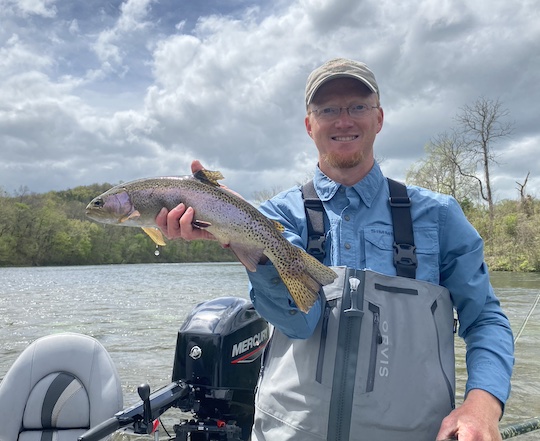
Taylor was about as gracious as any guide I've met. He knew I really wanted to fish the White, so we kicked around a little there after meeting up Tuesday morning. Even better, he put me on several big brown trout. I always half joke with people that I'm a better guide than angler, and the results that day proved why it is only a halfway joke. I missed several big fish including one that I would really like to have back. But, I finally connected on my first White River brown which taped out at 19". From there, the trip just got better and better. 
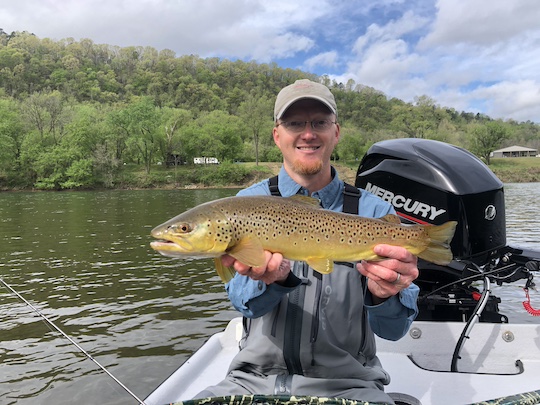
My first White River brown trout
Photo Courtesy of Taylor Wooten ©2024


After we kicked around on the White for a short time, we motored up the Norfork. Taylor graciously took me all the way up to the dam so I could see it and get some pictures. The rest of the day was a mix of nymphing and streamer fishing. I was glad to catch some nice strong rainbows that pulled as well as any I've caught. Eventually, the water started dropping out and we started heading back down the river. A few more nice brown trout interacted with my streamer but I never could seal the deal. 
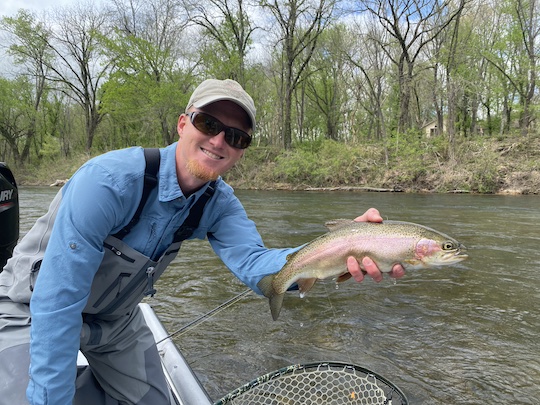
Fat Norfork River rainbow trout
Photo Courtesy of Taylor Wooten ©2024

Norfork River rainbow trout
Photo Courtesy of Taylor Wooten ©2024

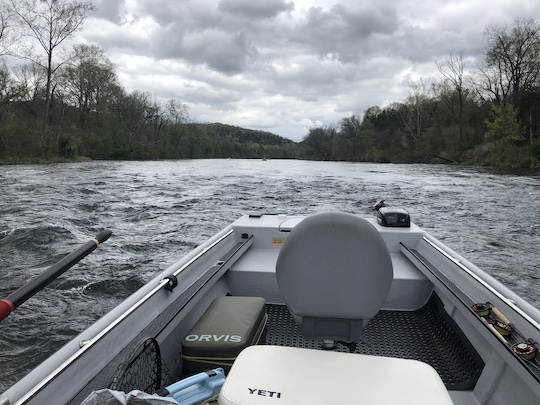
Motoring up the Norfork River
©2024 David Knapp Photography


Dam on the Norfork River
©2024 David Knapp Photography


As we slid into the takeout ramp, we checked the forecast for both weather and flows the next day. Things were looking wet, but there was a small bump of water in the morning on the White. Taylor graciously agreed to take me up to Bull Shoals dam the next morning even though he assured me that fishing hadn't been great up there as of late. I wasn't as worried about good fishing as most clients and more just wanted to see that part of the river system. 

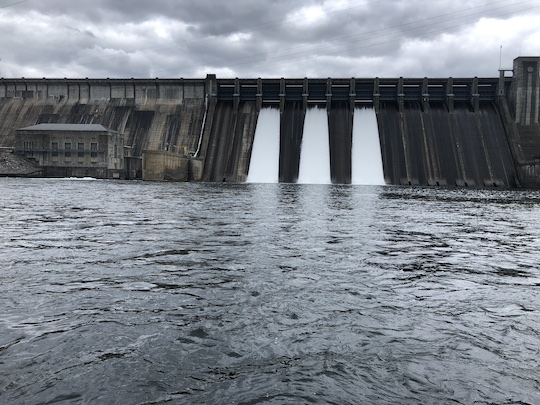
The next morning, the day dawned cloudy and dark. The threat of rain seemed very real and I was prepared for the worst. When we launched, a quick run up the river got us to the base of Bull Shoals dam, or at least as close as you are allowed to get. One thing that was interesting to me was that you weren't supposed to approach too closely to the dam. Here in Tennessee, we regularly get right up to the base of the dam on the Caney Fork River to fish the outflow from the turbines. However, there were very prominent signs everywhere prohibiting boaters from approaching the dam too closely. We went right up to the line and then started floating back down.

Bull Shoals Dam on the White River
©2024 David Knapp Photography

Streamers were the plan for the day. I still don't know how my arm held up, but I tossed my 8 weight Echo Streamer X (an absolutely incredible line of rods designed specifically for streamer fishing) almost the entire day. Taylor had some secret flies and we were ready to hunt. While I had a couple of half hearted follows up near the dam, Taylor was 100% accurate in his assessment of the current fishing up near the dam. It was pretty slow. While the temptation was strong to just hang around and fish that area regardless of the success rates, we started drifting on down the river.

Before long, we got side tracked. More accurately, Taylor let me side track us. We saw several pods of midging fish in a backwater, and I got excited. Midge fishing is just my game, so we stopped for a bit while I rigged up something for these fish. After a few stocker rainbows, it was apparent that I would get pulled in deeper and deeper by the occasional monster cruising around. If we wanted to stick to our plans, we needed to make a move and keep on streamer fishing.

Another move down river was in order, and before long, I was slinging the streamer rod again. The midge fishing interlude was just what I needed to get me going. As we approached a big shoal, Taylor gave me some directions as well as info about the water we were about to cover.

As the boat drifted down the bank, he started to point me to specific structure to target. The first good log produced a very large brown that I straight up missed. There were several fish that ate the streamer that I missed on this trip, and this was one of the better ones. Taylor saw that I was going to stew about missing the fish instead of getting back in the game and quickly pointed out the next log. I slung the fly and gave a strip. What happened next was one of the coolest eats I have ever seen on a streamer. 

A large brown trout came up and rolled all the way over the top of the streamer. From the casting deck on Taylor's Supreme, it was easy for me to see the whole thing unfold. The fish missed the fly entirely on the first pass and by some miracle I didn't pull the fly out of the strike zone. The fish came down, swam downstream right on the bottom of the river, and after getting below the fly, came up to attack it again. This time, it nailed the fly and I got a legit strip set. We were off to the races and soon had the big brown trout in the net. After pulling over and getting pictures, it was time to try again. 


White River brown trout
Photo Courtesy of Taylor Wooten ©2024

Releasing my first big White River brown trout
Photo Courtesy of Taylor Wooten ©2024


We moved another fish or two, but it became apparent that the water was dropping out. Taylor made the decision to start a series of big moves down river. Each move was made with the goal of reaching another shoal that had good flow and lots of structure that the brown trout liked to hide in. Each shoal also had lots of fish. I continued to have some opportunities, some larger than others, but the second big fish was eluding me. 

Finally, it all came together again in a particularly fast piece of water where a strong run swept tight to the right bank. This was another very nice fish over 20" with absolutely beautiful dark pumpkin colors. 
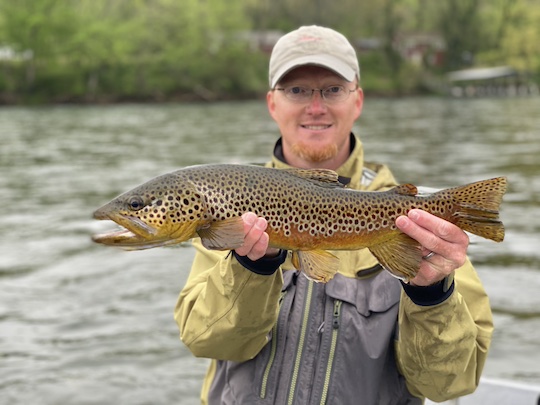
White River dark brown trout
Photo Courtesy of Taylor Wooten ©2024


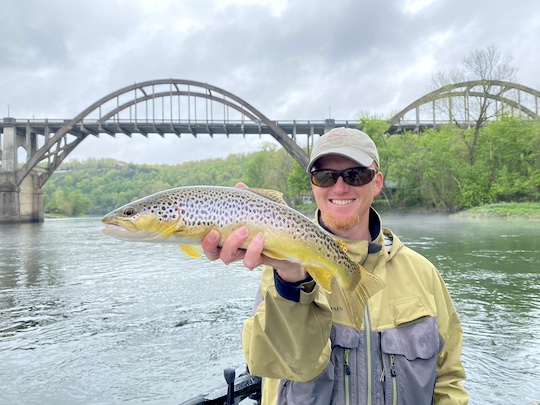
From there, we kept moving down the river and hitting different spots all the way to Cotter. Amazingly, one of the coolest fish happened right above a particularly famous and picturesque bridge that is recognizable to many people who love the White. It wasn't the biggest fish of the trip, but it provided a neat photo op right before we started a long run back up the river to where we had launched. With rain again threatening, we hurried back up river and got out before the rain arrived. 
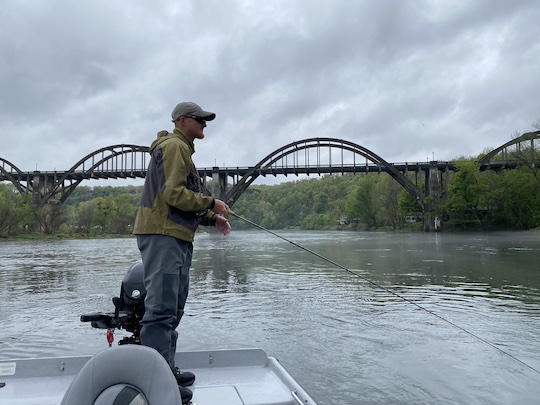
Fly fishing the White River in Cotter Arkansas
Photo Courtesy of Taylor Wooten ©2024

Brown trout on the White River at Cotter Arkansas
Photo Courtesy of Taylor Wooten ©2024


That night was soggy. Our tent was soaked the next morning, but thankfully very little rain made it inside. One door had just a little bit of water under the zipper where the seal wasn't the best, but otherwise we stayed warm and dry. Our original plan had been to do some hiking that day, and then head home the next day. However, the forecast was calling for very chilly weather that next night. With lows down near 40 degrees, we knew it was going to be cold. We had already been a little on the cool side camping, but really hadn't prepared well for lows down to 40 on this particular trip. 

With the sun coming out and a warm breezy day commencing, the thought of getting home a little early and having extra time to decompress and recover from our trip appealed. Once the tent dried out, we started breaking down camp and packing the car for the drive back home. We got a late start due to everything being soaked early that morning, but it was nice to get back home and start to recover from yet another excellent vacation.

I finally added another river to my list, one that I have long wanted to fish. Now I know why so many people love the White as much as they do. I'll be back as soon as possible. There are lots of other exciting possibilities on this river, from spring caddis and sulfur hatches, to late summer terrestrial fishing, to shad kill opportunities in the winter. The White River offers so much trout water and the possibility of a fish of a lifetime at any given moment. If you need a good guide for this river, I highly recommend that you check with Taylor Wooten of Flippin Fly Guides. He knows the river as well as anyone and works harder than most to put you on fish. 


Monday, February 12, 2024

Choosing the Best Fly Rod for Smoky Mountains Fly Fishing

If you're like me and have been around the inter webs for a long time, you've seen some variation of the question. What is the best fly rod for.....? You name it. Best fly rod for streamer fishing. Best fly rod for nymph fishing. Best fly rod for brook trout. Best fly rod for brown trout. Best fly rod for Yellowstone. In other words, people are always looking for an edge when it comes to their piscatorial pursuits. This question has been asked via online message boards, in person and on the phone when I worked at a fly shop, and nowadays on Facebook groups. The problem is, they are asking the wrong questions of the wrong people. The title for this short piece is clear enough, but I probably should have called it, "How To Ask the Right Questions About Fly Rods."

The real solution here that very few people actually seem to seriously want is to work hard at becoming a better angler. That could include investing money into some guided fly fishing trips or it could be as simple as just getting out on the water more. Investing a lot of time goes a long ways towards making someone proficient. If you have invested that kind of time, you've probably already figured out the answer to the question of best fly rod. If you haven't been fly fishing long enough or don't have the time to get out more, I'll address one specific version of this question. What is the best fly rod for Smoky Mountains fly fishing?

Before I get too far into my own personal opinions on the matter, I'll share some background. First, this is not the first, and probably won't be the last time I deal with some form of this question. I've covered How To Select the Perfect Fly Rod before. This is a little different from that post as you'll see. Go back and read it first just to be sure.  Second, I've been fly fishing for close to 30 years now or nearly 3/4 of my life. In other words, I have a little experience that has led me on a circutuous journey that has brought me nearly full circle on rod selection. I'll explain more shortly. Finally, note the first sentence of this paragraph. No matter how much I or any other angler may have learned a thing or two along the way, anything we might suggest is simply our own opinion. No matter what anyone else says, there is no right or wrong answer to any of these questions.

When I first started fly fishing, I got a Walmart special. In retrospect, I'm not sure it is even a fly rod. At the time, however, it was perfect. Everything about that rod looks like a fly rod except for how clunky it is and how terribly it casts. I'm suspicious it is actually some sort of crappie rod, and yes, I do still have it floating around somewhere. Still, and this is the important part, I learned to cast with the rod. In fact, I was hauling and even double hauling without knowing that was a thing. The darn rod wouldn't cast worth a flip without a good haul. Necessity is the mother of invention. At the time, I didn't know that hauling was an actual technique, so I made it up as I went. As time went on, I yearned for a better rod. Now I know better. That is a slippery slope, but at the time I was convinced that a better rod would help. 

The next rod wasn't half bad, but still not the right rod for the job. It was a 6 weight, too heavy for what I was doing, but better than my current setup. Of all the rods I've ever owned, I actually have probably used it the least or pretty close to it. Not that anything was especially wrong with the rod, but it wasn't too long after getting this rod that I got my first "nice" rod. That 6 weight did come in handy years later, but that's another story for another day. My first nice rod was an Orvis Superfine 8' 4 weight, known as the Tight Loop. To this day, it is still one of my absolute favorite fly rods. So much so, in fact, that I eventually picked up a second to have as a backup. Orvis doesn't make these rods and hasn't for more than 20 years I believe, so you can't just get a new one made unfortunately.

That rod really molded me as an angler. Because it was the nicest rod I had for several years, it became all I fished. I learned to do a LOT with that 8' 4 weight rod, but what it really excels at is dry or dry/dropper fishing on small to medium sized mountain streams. When I learned to high stick nymphs for the legendary Walter Babb, he kindly suggested that I might want a slightly longer and faster rod. The soft Superfine is just too flexible to be a great tight line rod although it works in a pinch. In fact, I learned to be deadly with that rod, but it is not the most efficient rod I could use for that method. Thus it was that I found myself looking for yet another fly rod. The next rod would be my 4th in case you're counting. Don't worry, the numbers will get really blurry quickly. 

My next "nice" rod was a 9' 5 weight St. Croix Legend Ultra. When I first got the rod, I was in college and had it shipped to my dorm. When it arrived, I hurried to string it up and cast it on the lawn. I was almost convinced the rod was broken. Yet, upon examination, the rod looked intact. You see, my casting stroke had evolved through the prior three rods and settled into something that made the SUPER SLOW Superfine (Say that 10 times fast!) work magic. It was far from fitted for a super fast St. Croix (Try that one also!). It took me quite a bit of work to make that fast action rod work correctly, but I got the hang of it and soon found myself fishing it far more than the Superfine. I had evolved as an angler and was more interested in the most effective fishing tool. The Legend Ultra was an amazing high sticking rod. Being so fast, you could stick most fish that ate instead of missing many like I did on the Superfine. Setting the rod hard enough was no longer my limiting factor.

After the 5 weight Legend Ultra, my next rod was a 9' 7 weight Temple Fork Outfitters TiCr-X. Even though I've had that rod for probably close to 20 years now, it is still one of my favorite streamer rods. I've caught big trout, largemouth and smallmouth bass, drum, carp, stripers, musky and many other fish on that rod. Since then, I've picked up just a few more rods. Short rods, long rods, 1 weight rods, 2 weight rods, 3 weight rods, 4 weight rods, 5 weight rods, 6 weight rods, 7 weight rods, 8 weight rods, 10 weight rods, 11 weight rods, well, you get the picture. Some rods have stayed and kept a place in my gear closet, while others have been sold to make room for more pressing needs. The important part here, however, is that I have plenty of options to choose from when I go fishing in the Smokies. In general, I find myself reaching for one of 4 or 5 rods depending on where I am fishing.

If I'm fishing Little River, Abrams Creek, the Oconaluftee, Deep Creek, Cataloochee Creek, or any of the other larger Park streams, I'm probably reaching for my 10' 3 weight Orvis Recon, or a 10' 2 weight Echo Shadow X. The Echo is an incredible rod, but the main reason I don't reach for it every single time is that it is a little light for jigging heavier streamers. I find that my Orvis 10' 3 weight Recon can do anything (for me) from jigging heavier jig streamers, to throwing dry flies, to high stick nymphing. In other words, it can cover any possible situation that might arise on the medium to large streams of the Smokies. It isn't the best rod for beginners because it is a little stiff. That makes it tough to get the hang of for someone new to fly fishing and trying to cast dry flies, but if you have been doing it a while, you can make this rod do everything. The Echo Shadow X is probably more fun to fish, and a nice Smokies fish feels incredible on the 2 weight. I'm just nervous casting super heavy jig streamers on a rod with such a delicate tip. There was a point where I thought you couldn't go too long on fly rods, but for me the 10' rod is the sweet spot. I have an 11' 3 weight Echo Shadow X that is just a little too much rod for me in many situations. If all you're doing is high stick nymphing, however, it is hard to beat as well.

If I'm going fishing for brook trout, then I'm likely reaching for a slightly shorter rod. I've fished 10' and longer rods on brook trout streams, and they are actually pretty useful. However, I like a deeper flexing rod for brook trout, and find myself reaching for the old Orvis Superfine rods or a fiberglass rod more often than not. If I know I'm only fishing dry flies or maybe a dry/dropper, then something between a one and four weight is perfect, and I hope it has a nice slow action. When you hook a 10 inch fish on a rod like this, you'll double the rod up and think you've hung the biggest fish in the Park. Lots of fun! 

At this point, you might be asking yourself, which of these is the best fly rod for Smoky Mountains fishing? And that is the wrong question. What you need to be asking is what rod will I enjoy the most? Or maybe, what rod will help me catch the most fish? Or what rod is most effective for method XYZ? The answers to those questions are not necessarily the same. 

I have long held that many people's recommendations for shorter rods for Park fishing is the furthest thing from the right rod for the job, and I still stand by that belief. However, that only applies for the question of what rod is the most effective rod in the Smokies. I can only think of two or three brook trout streams I've fished where I shorter rod is better suited for the job. For probably 90% or 95% of Great Smoky Mountains fly fishing, a rod ranging from 8'6" to 10" (or even longer) is ideal. This is because we find ourselves high sticking more often than not (for dry flies, nymphs, and streamers even on occasion). Longer rods equals longer reach. The farther you can reach towards the fish without spooking them the better, at least up to a point. There is a point of diminishing returns, however, based on rod swing weight and if it starts getting tip heavy, you've probably gone too long. That said, high sticking can be a mask for a deeper problem. Some high stick anglers continue to only fish that way because they find much less success utilizing other methods. 

And that brings us to the next point. Shorter rods are fine if you just like to cast and don't fish as much pocket water. However, longer rods will still help you mend better because a longer rod can pick up more line off of the water. So now the question becomes clearer. Do you want the most effective rod, or do you want the rod you will enjoy most? If you measure enjoyment by how many fish you catch, then probably go for the longer rod most of the time (and not one that is too soft). Even on brook trout streams, fish the absolute longest rod you can manage without getting in the bushes and trees all day. If you measure enjoyment as a function of the joy of casting the rod combined with the total experience of catching fish in a pristine mountain stream, then a shorter deeper flexing rod might be the ticket. This is especially true if you enjoy playing the fish and not just yanking them in one after another. A true sporting gentleman might take this one step further and make sure the rod is made of split bamboo by a fine rod maker.

Deciding which rod you'll enjoy the most comes down to just casting a bunch of rods. Go to your nearest fly shop and cast a bunch of rods or ask your favorite guide to bring a selection to sample on the next guided trip. Ask questions of your local fly shop employees such as what rod will help me catch more brook trout? Or what rod will make me a better dry fly angler? Or what rod is best for high sticking/euro nymphing/tight lining/whatever else you want to call it? Or what rod brings YOU the most joy to fish? Ask 100 shop employees that last question and you'll get a TON of different answers, just like in that Facebook group.

Most of the best anglers I know aren't hanging out on online forums answering and asking questions about the best fly rods. So just know that your answers on places like a Facebook group will be wildly inaccurate, or at best will be rooted in that person's favorite (and in some cases only) rods. Make sure to ask the correct question, and it will go a long ways towards helping you select your next fly rod. If you need help figuring out what rod you need, don't hesitate to reach out to me. I won't necessarily have the right answer, but I'll definitely have some opinions, and I don't mind sharing those. The best discussion will probably happen on the phone or in person, because there isn't usually a simple answer. I'll work through the question with you to make sure we are asking and answering the intended question to get you the right rod. 

If you need a Great Smoky Mountains fly fishing guide, learn more HERE

Want to read more? Check out this story of a Smokies autumn fishing trip.

Big Browns in the Smokies in Fall